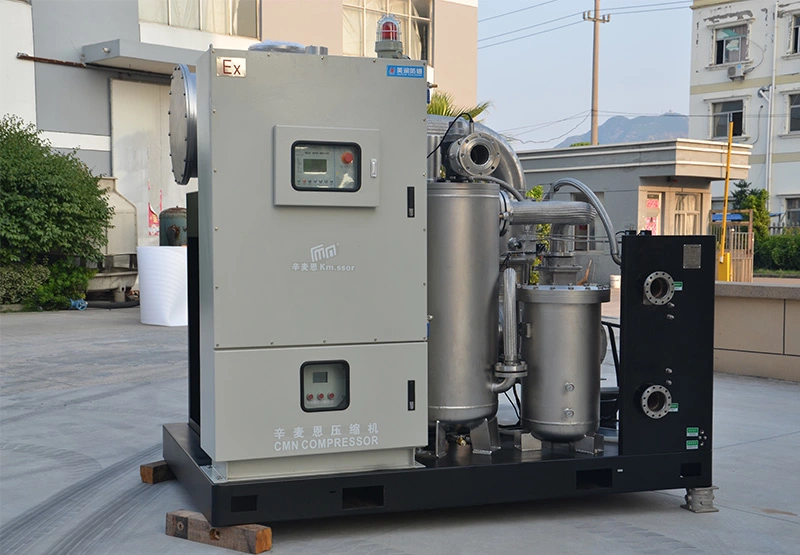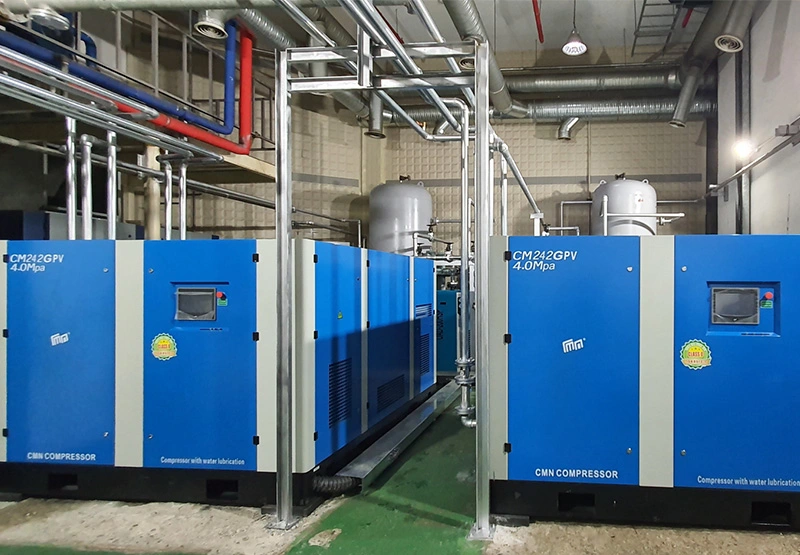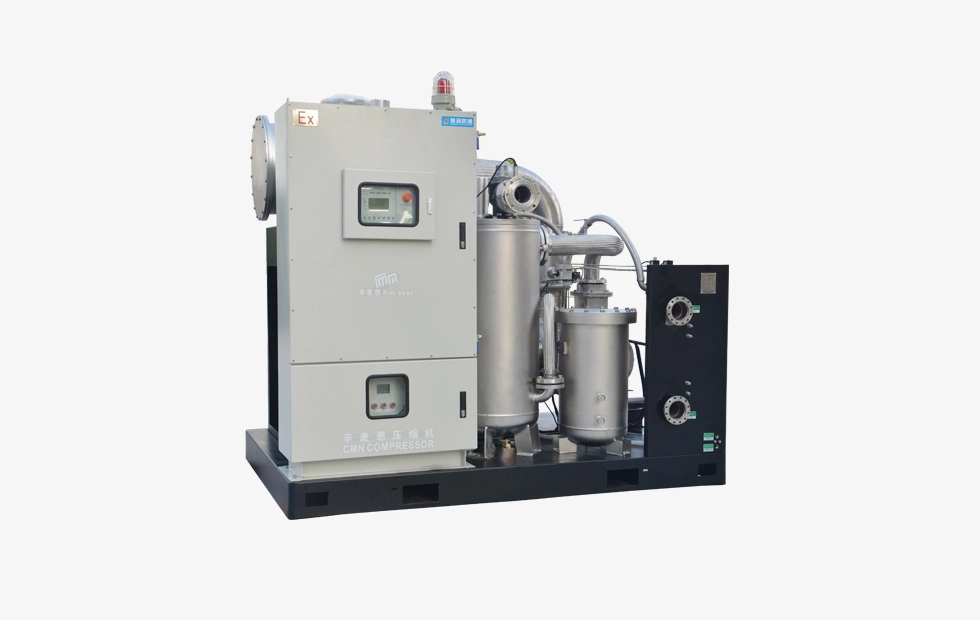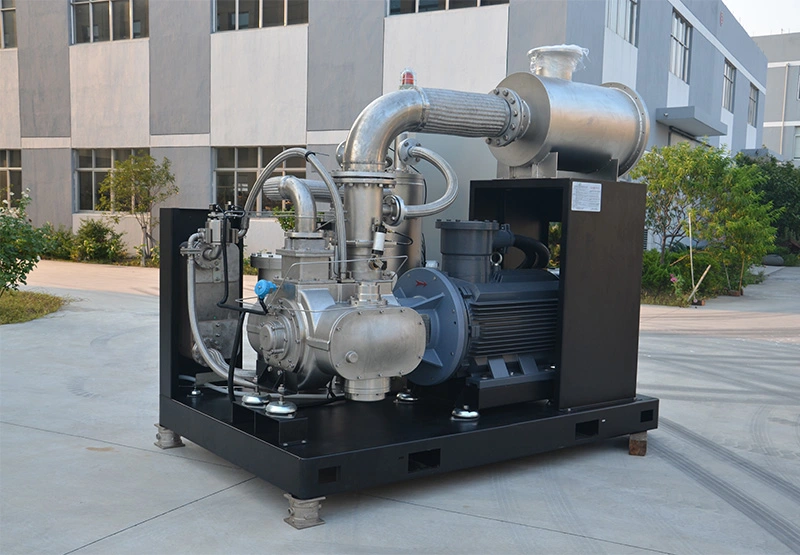

Among oil-free screw technologies, the water injected screw compressor stands apart for one reason: it introduces water into the compression chamber, turning cooling into part of the compression process. This article compares CMN's water-injected single-screw design with dry oil-free screw compressors so buyers can pick the right architecture.
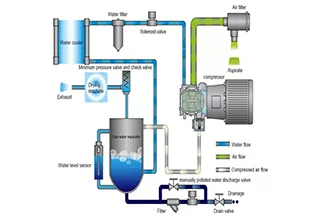
Water is sprayed into the chamber as the screw turns.
It seals compression pockets and strips heat instantly.
Discharge air stays near-isothermal (~40–50°C).
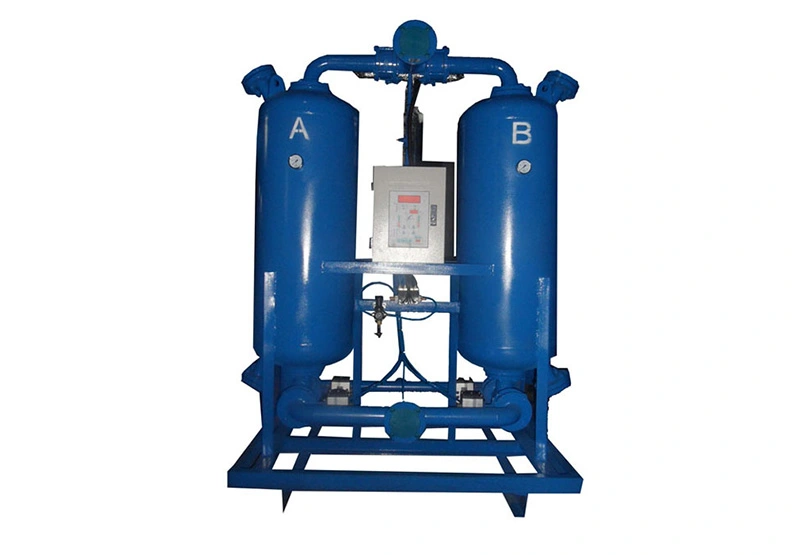
A separator and dryer prepare the air for the network.
CMN builds this on a single-screw platform for balanced forces and durability.
Dry oil-free screw compressors use no liquid in the chamber:
Rotors rely on tight tolerances and surface coatings.
Compression runs hot, raising thermal stress.
Coating wear eventually demands rotor refurbishment.
Factor | Water injected (CMN) | Dry oil-free |
Cooling | Near-isothermal | Hot running |
Purity | Class 0, no oil | Class 0, no oil |
Wear | Low (cool, balanced) | Coating wear risk |
Service | Water circuit | Rotor refurbishment |
Noise | Lower (water damping) | Higher |
Because water injected screw compressor operation stays cool, less energy is lost as heat and components age slower. On variable-demand lines, CMN's PMVSD GPV models (CM110GPV through CM320GPV) add further savings by matching output to load.
A water injected screw compressor offers the purity of dry oil-free types with cooler running, lower wear, and simpler long-term service. CMN's single-screw water-injected design is a strong fit for beverage, food, pharma, electronics, and textile users needing Class 0 air.
CTA: Contact CMN to compare a water injected screw compressor with dry types for your application, or send specs for a quote.
 sales@cmncompressor.com
  +86-15325678508
 English