
Oil-free compressor maintenance is simpler in some ways than oil-injected systems, but it is not “set and forget.” The best way to protect air purity and keep operating costs low is to follow a repeatable routine that covers inlet air quality, cooling, pure water management, and verification of system performance. Done right, maintenance is less about emergencies and more about preventing small changes in pressure and temperature from turning into downtime.
This guide focuses on the practical, standardized maintenance cycles for water-injected oil-free screw compressors, ensuring optimal performance and longevity for your CMN equipment.
Start with a strict schedule your technicians can execute without guessing. Tracking readings and maintaining the pure water system consistently is more valuable than occasional deep inspections.
Daily (Every 8 Hours) Checks
Water Valve Verification: Confirm whether the auto water replenishing and drain valves are open before starting up. For water-cooled units, ensure the cooling water circulation is active.
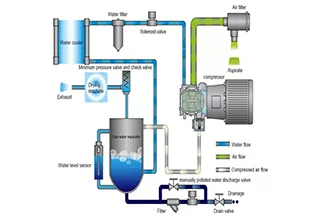
Discharge Deposits: Open the manual water drain valve under the water-air separator (cylinder) to discharge any deposits at the bottom, then strictly close the valve manually.
Water Level Check: Confirm the pure water level is within the standard scope. If insufficient, open the manual water replenishing valve to add pure water to the high-level mark, then close it.
Operational Safety: Confirm that the manual water replenishing and drain valves are closed completely before operation. Never open these valves while the machine is running.
Weekly Checks
Inspect Pipe Adaptors: Check whether pipe connections have become loose or are leaking due to thermal expansion after operation. Re-tighten adaptors if necessary.
System Cleaning: Clean the entire compressor system, wiping away dust and dirt to prevent overheating.
Quarterly (Every 500 Hours) Checks
Filter Maintenance: Check the Y-Type filter and the cooler; remove any accumulated dust or scale deposit.
Air Filter Care: Check the air filter and clean the cartridge (shorten this maintenance cycle if operating in a dusty environment).
New Machine Protocol: Important: For a brand-new machine, operate it for 500 hours for the first time, and then immediately change both the water filter and the air filter.
Annual & Long-Term (1,000 to 6,000 Hours) Maintenance
Every 1,000 Hours: Change the water filter cartridge (ensure you use the exact same specification) and replace the air filter cartridge.
Every 1,000–3,000 Hours: Apply lubricating grease to the electromotor (refer to the motor’s specific lubrication manual).
Every 3,000 Hours: Systematically check the temperature probe, pressure transmitter, electrical system, safety valves, and water level controller.
Every 6,000 Hours: Fill grease into the main compressor block. This is mandatory to prevent major mechanical failures.
Treating "oil-free" as "maintenance-free"Oil-free compressors remove oil management tasks, but they still depend on clean inlet air, stable cooling, and, most importantly, rigorous pure water management and correct drainage.
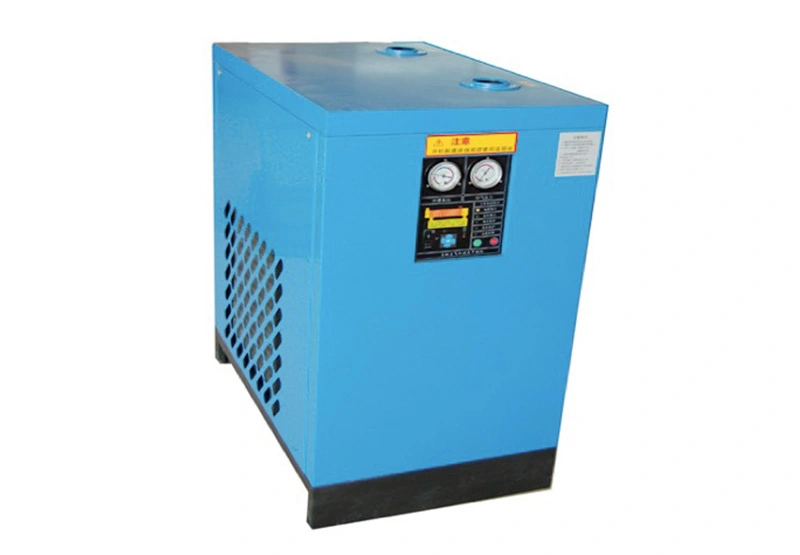
Neglecting air treatment equipment Dryers and filters still do the heavy lifting for moisture and particles. A well-maintained dryer and filtration train protects your production line just as much as the compressor itself.
Ignoring replacement milestonesMany plants change filters only when a problem occurs. Tracking operating hours and replacing water/air filters at the 1,000-hour mark prevents pressure drops, wasted power, and internal component wear.
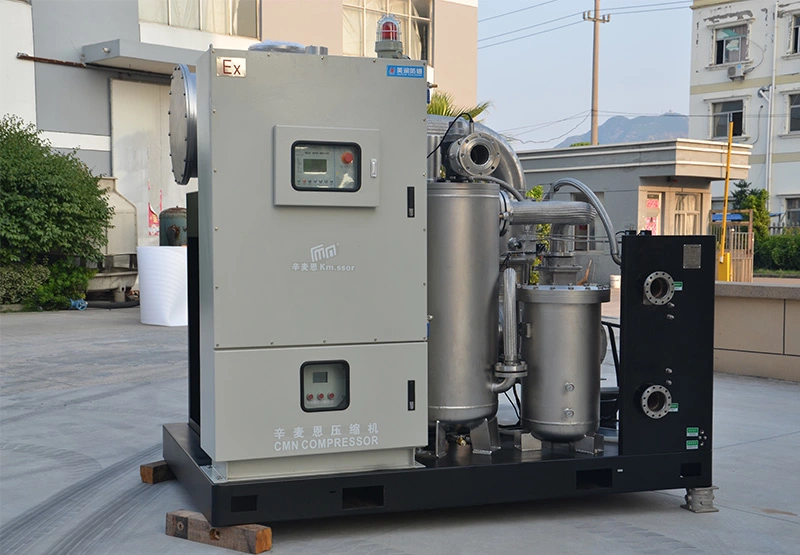
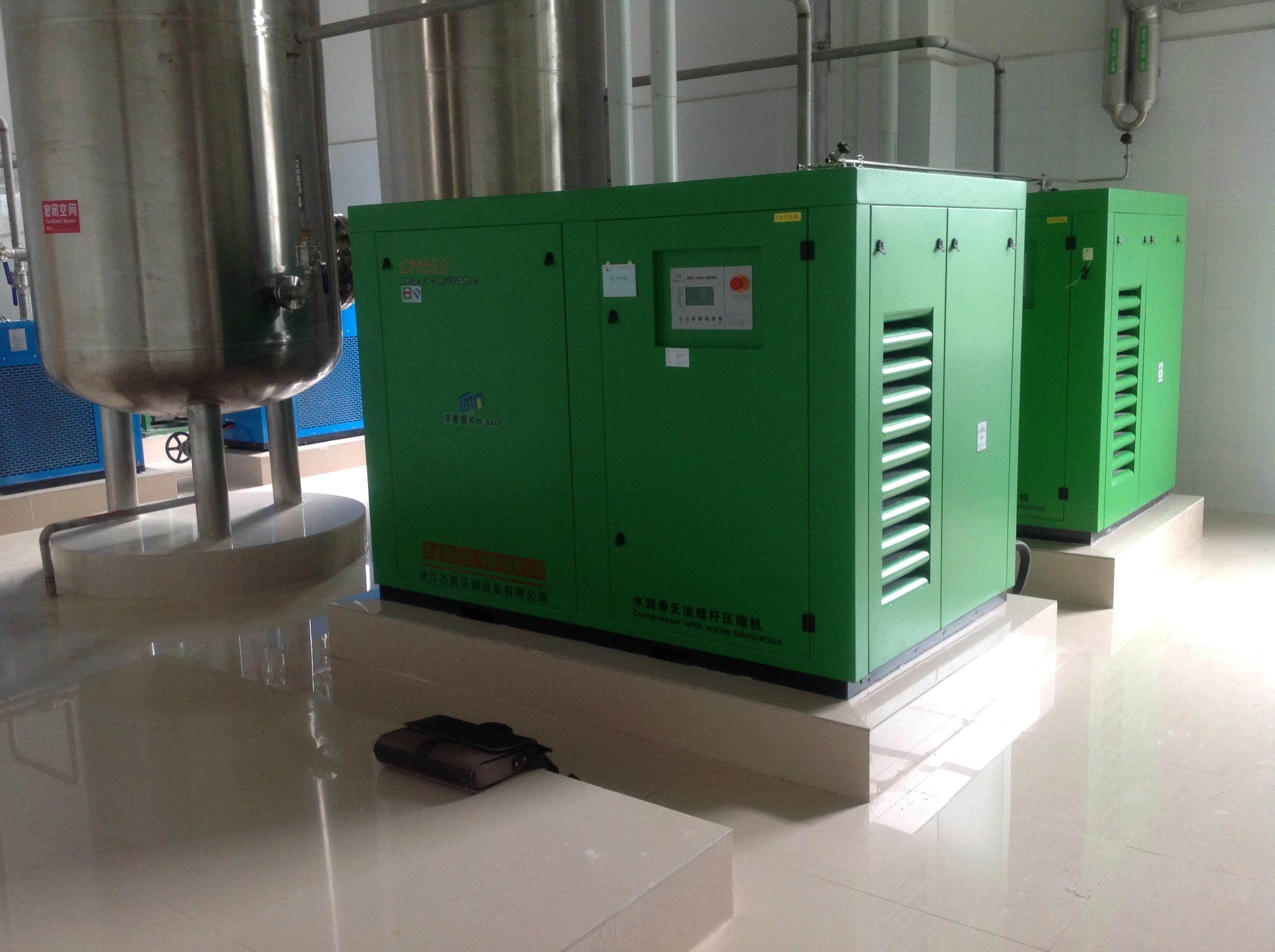
For teams evaluating long-term maintenance workloads, design choices matter. The full range of CMN oil-free air compressors is certified by TÜV Rheinland in Germany as 100% oil-free, aligning with strict Class 0 requirements. Unlike traditional dry-type oil-free designs that rely on complex seals, CMN water-injected oil-free air compressors do not contain any lubricating oil in the entire machine, completely eliminating oil-related contamination risks at the source.
CMN also utilizes permanent magnet variable frequency (PM VFD) motors to improve efficiency across variable demand. This reduces unnecessary run time and heat load—two factors that often drive excessive maintenance events. If you are sourcing a reliable oil-free compressor solution for a site with fluctuating demand, this control strategy provides a massive practical advantage.
How often should an oil-free compressor be serviced?Service frequency depends on the operating hours.
In practice, daily pure water level checks and weekly cleaning are required. Deeper inspections happen at 500 hours, with major filter replacements every 1,000 hours, and vital greasing at 3,000 and 6,000 hours.
What are the main wear items in an oil-free system?
For water-injected oil-free systems, the main items are the air filter cartridges, pure water filter cartridges, Y-Type filters, and the cooling system components. Proper maintenance of these items determines the stability of pressure and system longevity.
Can an oil-free compressor still contaminate compressed air?
Yes. Moisture, rust, and ambient particles can still enter the air stream if the dryer, filters, or pure water system are not correctly maintained. "Oil-free" guarantees no oil carryover, but it does not replace the need for proper downstream air treatment.
 sales@cmncompressor.com
  +86-15325678508
 English