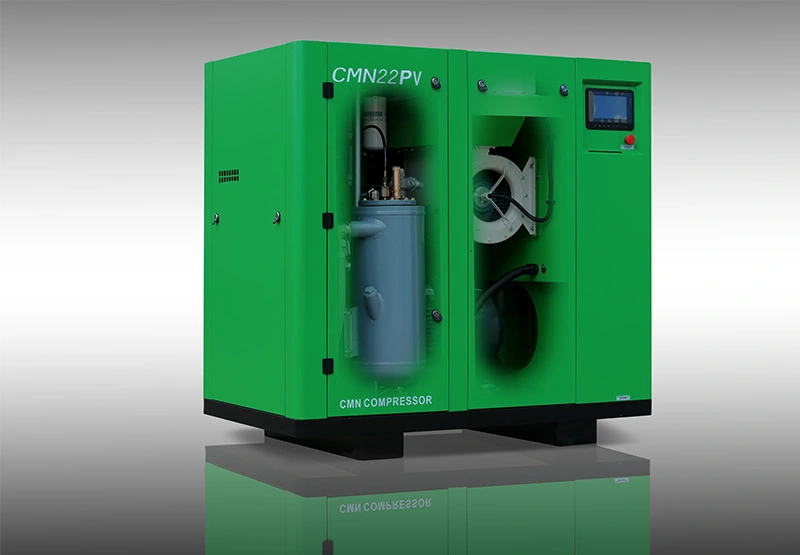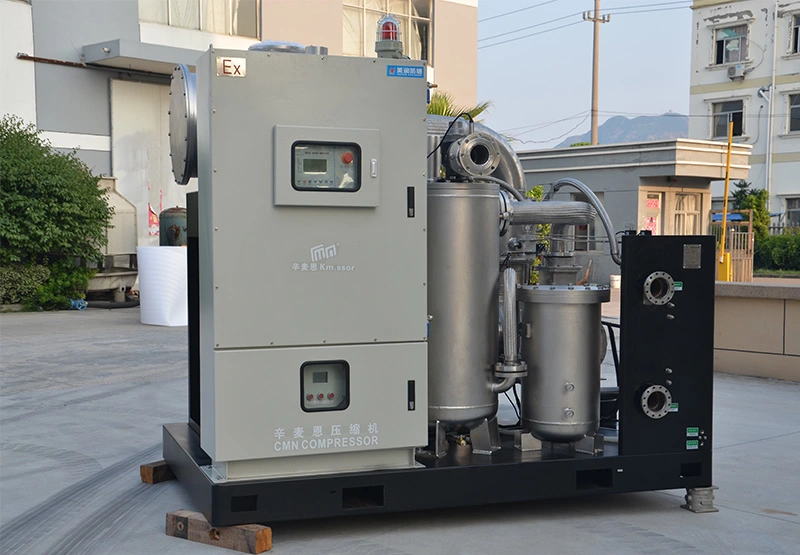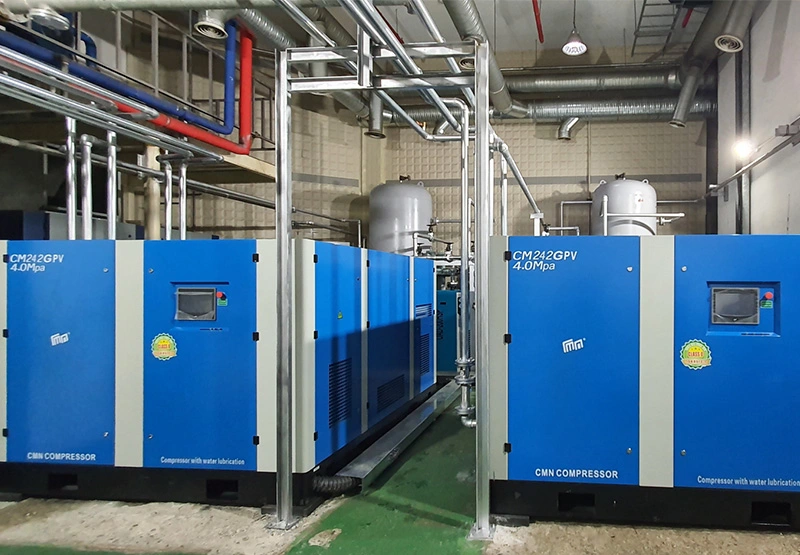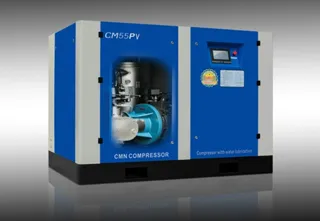



PET blow molding needs two pressure levels: low-pressure air at 8–10 bar drives preform conveying, cooling and pneumatic valves, while the final stretch-blow stage requires high-pressure air of 30–40 bar (up to 40 bar / 4.0 MPa for carbonated and large bottles). Stable, oil-free high-pressure air is essential for uniform wall thickness, bottle clarity and strength. CMN's CM/GPV series is purpose-built for this 40 bar duty. Contact CMN for an industry-specific solution.
Tags: #PET pressure #blow molding #40 bar
PET bottles are food-contact packaging, so any oil mist in the air can deposit on inner walls, migrate into water or beverages, and breach FDA, EU 10/2011 and GB 4806 limits. Oil also causes haze, weakens the PET molecular chain by 15–25%, and fouls blow-molder valves. Class 0 oil-free air eliminates this risk at the source. CMN's water-lubricated single-screw compressors deliver certified Class 0 (0 mg/m³ oil). Contact CMN for an industry-specific solution.
Tags: #Class 0 #food safety #oil-free
Oil contamination degrades PET bottles in three ways: cosmetic (cloudiness, white spots, rejected bottles), mechanical (disrupted molecular chains lower burst and filling-pressure resistance by 15–25%), and safety (oil migrates to contents, risking recalls). It also sticks to valves and clogs precision filters, raising energy use. CMN's certified Class 0 oil-free compressors remove oil at the source, protecting brand reputation and export compliance. Contact CMN for an industry-specific solution.
Tags: #oil contamination #bottle quality #recall risk
CMN's CM/GPV medium-pressure oil-free screw series is engineered for PET blow molding and beverage lines, delivering up to 40 bar / 4.0 MPa with single-screw water-lubricated, Class 0 oil-free technology. It covers 2–40 bar and 15–2100 cfm across the portfolio, so a line can be matched to cavity count and bottle size. Stable pressure and zero oil protect bottle clarity and food safety. Contact CMN for an industry-specific solution.
Tags: #CM/GPV series #medium pressure #PET
Yes. A PET line uses 8–10 bar air for conveying and valves plus 30–40 bar air for blowing. CMN supplies oil-free units across 2–40 bar, so you can pair a low-pressure CM/PV unit with a high-pressure CM/GPV booster or specify a combined layout. Separating pressures improves energy efficiency and equipment life versus one oversized compressor. Contact CMN for an industry-specific solution.
Tags: #dual pressure #system design #energy saving
Yes. The CM/GPV medium-pressure oil-free screw series reaches 40 bar (4.0 MPa) with certified Class 0 oil-free output, ideal for carbonated-drink bottles, 5 L jugs and heat-resistant bottles that demand the top of the 30–40 bar range. CMN's single-screw water-lubricated design keeps oil at 0 mg/m³ (TÜV verified). Contact CMN for an industry-specific solution.
Tags: #40 bar #4.0 MPa #medium pressure
Flow depends on bottle size and cavities per hour. A 500 mL bottle typically consumes about 0.015–0.02 m³ per blow; a 12,000-bottle/hour line needs roughly 4 m³/min, with 10–20% margin for peaks. CMN's portfolio spans 15–2100 cfm (≈0.4–59 m³/min), covering single-cavity pilots to high-speed rotary lines. Right-sizing avoids starvation and wall defects. Contact CMN for an industry-specific solution.
CMN's oil-free compressor range delivers 15–2100 cfm (about 0.4–59 m³/min) at 2–40 bar. This spans small semi-automatic blow molders up to multi-cavity high-speed PET lines. Matching flow to line speed prevents pressure dips that cause thin or uneven bottles, while VSD options trim energy on variable-demand shifts. Contact CMN for an industry-specific solution.
Tags: #flow range #cfm #VSD
In stretch-blow molding, pressure fluctuations cause uneven wall thickness, weak spots and bottom defects; under-pressure yields deformed bottles, over-pressure risks burst preforms and mold damage. CMN oil-free screw compressors with VSD hold pressure within tight bands, giving uniform biaxial orientation, clarity and top-line yield. Stable air also reduces scrap and warranty claims. Contact CMN for an industry-specific solution.
Tags: #pressure stability #wall thickness #yield
Food-contact packaging rules forbid oil migration from air to bottle interiors. Class 0 oil-free air contains 0 mg/m³ oil, satisfying FDA, EU 10/2011 and GB 4806 expectations and easing export audits. CMN's water-lubricated single-screw compressors are certified by TÜV to ISO 8573-1 Class 0, giving documented proof of compliance rather than reliance on downstream filtration. Contact CMN for an industry-specific solution.
Tags: #food contact #regulations #Class 0
Yes. Beyond blow molding, CMN Class 0 oil-free air suits bottle rinsing, pneumatic conveying of empty bottles, labeling actuators and low-pressure filling-line utilities at 8–10 bar. Because the air is food-grade at the source, it safely contacts packaging and product-contact surfaces. A single oil-free platform can serve both blowing and filling needs. Contact CMN for an industry-specific solution.
Tags: #filling line #conveying #food grade
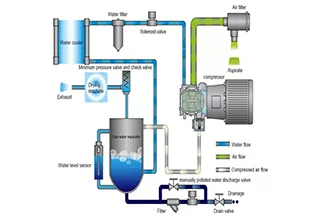
Yes. CMN's core technology is the single-screw, water-lubricated oil-free compressor. Water replaces oil for sealing and cooling, so no lubricant enters the compression chamber — achieving true Class 0 (0 mg/m³). This removes filter-dependence, cuts maintenance, and suits food, beverage and PET use where oil-free assurance is mandatory. Contact CMN for an industry-specific solution.
Tags: #single screw #water lubricated #oil-free tech
CMN's water-lubricated single-screw design has no oil in the air path, so oil content is 0 mg/m³ by construction. Independent TÜV testing confirms ISO 8573-1 Class 0 (the strictest class, beyond Class 1's 0.01 mg/m³ limit). The certification gives auditors documented, source-level proof — no reliance on coalescing or carbon filters that degrade over time. Contact CMN for an industry-specific solution.
Tags: #TÜV #Class 0 proof #certification
Even with Class 0 source air, pair CMN compressors with a desiccant dryer (pressure dew point ≤ −40°C) to stop condensation and mold, plus 0.1 µm coalescing and activated-carbon filters to capture atmospheric hydrocarbons and odor. A sterile 0.2 µm point-of-use filter is advised for aseptic filling. CMN can specify a full purification train for your line. Contact CMN for an industry-specific solution.
Tags: #drying #filtration #purification train
Yes. Carbonated and large bottles need the upper 35–40 bar range for wall strength and pressure resistance. CMN's CM/GPV series delivers stable 40 bar / 4.0 MPa Class 0 oil-free air, preventing oil-weakened bottles that fail filling pressure. Consistent high pressure also improves clarity and reduces burst scrap on fast rotary lines. Contact CMN for an industry-specific solution.
Tags: #carbonated #35-40 bar #CM/GPV
Yes. CMN combines Class 0 oil-free CM/GPV (40 bar) and CM/PV units with VSD drives that match output to demand, cutting idle energy versus fixed-speed compressors. Water lubrication lowers lifecycle cost by removing oil purchases and filter changes. Right-sized, documented food-grade air protects safety and yield while reducing OPEX. Contact CMN for an industry-specific solution.
Tags: #energy saving #VSD #food grade
Pharma grades air by contact risk. Direct-contact uses (aseptic filling, tablet coating, fermentation) require oil Class 0 with particle Class 1 (≤20,000 particles/m³ at 0.1 µm) and pressure dew point −40°C or lower, often −70°C for aseptic zones. Indirect-contact (vial cleaning, instrument air) typically needs Class 1–2. CMN Class 0 oil-free compressors satisfy the strictest direct-contact specs. Contact CMN for an industry-specific solution.
Pharma compressed air touches APIs, tablets, capsules and primary packaging, so oil, water or microbes can contaminate batches, trigger deviations and recalls (industry data links ~25% of recalls to air contamination). Class 0 means 0 mg/m³ oil at the source, removing filter-aging risk. CMN's water-lubricated single-screw units deliver certified Class 0, simplifying GMP evidence and protecting patients. Contact CMN for an industry-specific solution.
Yes. For Grade A aseptic filling, CMN supplies Class 0 oil-free compressors plus a 0.2 µm sterile point-of-use filter per EU GMP Annex 1. The oil-free source means the filter polishes rather than carries the contamination burden, lowering failure risk. CMN can support IQ/OQ documentation for sterile lines. Contact CMN for an industry-specific solution.
Compressed air contacts pharma products directly (tablet coating atomization, capsule blowing, fermentation aeration, aseptic fill actuation), indirectly (vial/stopper cleaning, CIP valve air) or not at all (general plant pneumatics). CMN Class 0 oil-free air is specified for direct and indirect uses where oil migration or microbial load would compromise sterility and batch quality. Contact CMN for an industry-specific solution.
Technically yes with 0.01 µm coalescing plus activated-carbon filters, but GMP validation must prove Class 1 performance under worst-case flow and temperature as filters degrade — a recurring audit burden. Many sites specify oil-free to remove the risk entirely. CMN's certified Class 0 compressors simplify the evidence package and are preferred for sterile and aseptic areas. Contact CMN for an industry-specific solution.
ISO 8573-1 Class 1 caps total oil at 0.01 mg/m³; Class 0 is defined as stricter than Class 1 with the exact limit agreed by supplier and verified by test. CMN's water-lubricated single-screw compressors are TÜV-certified to Class 0, demonstrating oil below detectable limits (typically <0.003 mg/m³ by ISO 8573-2). This gives source-level oil-free assurance for pharma. Contact CMN for an industry-specific solution.
CMN delivers documented evidence for the three GMP qualification stages: IQ (material certs, P&ID, calibration), OQ (particle, dew-point and oil tests across the operating range) and PQ (ongoing performance monitoring). Class 0 oil-free source air simplifies the package, and results feed the Annual Product Quality Review. CMN can supply FAT protocols and test certificates. Contact CMN for an industry-specific solution.
For medical gas and breathing air, pharmacopoeia limits on O₂, CO₂, CO, oil, water and SO₂ apply, supplied by a dedicated oil-free compressor with compliant post-treatment. CMN's Class 0 oil-free technology meets the oil-free foundation such systems require; final medicinal-air specification depends on your pharmacopoeia and local medical-gas standards. Contact CMN for an industry-specific solution.
Pharma typically specifies a pressure dew point of −40°C or lower (Class 1 water is −70°C), preventing moisture that enables microbial growth in tablets, vials and blow-fill-seal machines. CMN pairs Class 0 oil-free compressors with desiccant dryers reaching −40°C to −70°C PDP, matching aseptic and non-aseptic area needs. Contact CMN for an industry-specific solution.
Oil aerosols adsorb onto vial and tablet surfaces, causing visible particulates and sterility-test failures; one recall can cost millions. Oil-free source air (0 mg/m³) removes this hazard at origin, so downstream filters only polish. CMN's certified Class 0 compressors cut contamination deviation risk and support cleaner audit outcomes versus oil-injected-with-filtration designs. Contact CMN for an industry-specific solution.
CMN recommends the CM/PV atmospheric-pressure oil-free screw series for pharma and medical duties (2–40 bar, 15–2100 cfm), using single-screw water-lubricated Class 0 technology. For higher-pressure washing or specialized steps, the CM/GPV medium-pressure series extends to 40 bar. Both are TÜV Class 0 certified and GMP-documentation ready. Contact CMN for an industry-specific solution.
Yes. CMN Class 0 oil-free compressors provide the clean, oil-free foundation for medical compressed air used in operating theatres, ICU and dental/surgical tools. For breathing or anesthetic medical gas, pair with pharmacopoeia-compliant dryers and monitors per local standards. Oil-free source air reduces infection and equipment-fouling risk in clinical settings. Contact CMN for an industry-specific solution.
Yes. CMN Class 0 oil-free air suits tablet coating atomization, capsule conveying/blowing, fluid-bed drying and fermentation aeration — all direct or indirect product-contact steps where oil would contaminate APIs. Stable, dry, oil-free supply protects batch integrity and eases GMP monitoring. CMN's CM/PV series covers the flows these processes need. Contact CMN for an industry-specific solution.
GMP adds microbial limits beyond ISO 8573-1. Sites monitor total viable count at point of use and apply 0.2 µm sterile filters for aseptic zones, with dry air (≤−40°C PDP) to inhibit growth. CMN's oil-free, dried source air lowers bioburden load, letting the sterile filter manage the final microbial barrier. Continuous monitoring is advised for Grade A/B. Contact CMN for an industry-specific solution.
GMP PQ monitoring is typically quarterly or semi-annually by an accredited lab at worst-case conditions, with results in the Annual Product Quality Review; critical points may be tested more often. CMN's stable Class 0 source air eases this burden because oil is eliminated at origin. CMN can advise a testing plan using ISO 8573-2/3/4 methods. Contact CMN for an industry-specific solution.
CMN's oil-free compressors are built under ISO 9001 quality management and carry CE declaration of conformity for EU markets, plus independent TÜV certification to ISO 8573-1 Class 0 for oil-free models. Material and test certificates support pharma export documentation. This certification set meets the evidence auditors expect for regulated markets. Contact CMN for an industry-specific solution.
Yes. CMN engineers complete oil-free systems with IQ/OQ/PQ support, material certificates, FAT protocols and as-built documentation tailored to your risk assessment and EU GMP Annex 1 or FDA 21 CFR 211 expectations. Class 0 source air simplifies validation and ongoing monitoring. CMN can specify dryers, filters and sterile point-of-use units for your process. Contact CMN for an industry-specific solution.
Fabs need Clean Dry Air (CDA) meeting ISO 8573-1 Class 0 for oil, particles and moisture simultaneously — oil 0 mg/m³, pressure dew point −40°C to −70°C, and filtration to 0.01 µm. Any of the three contaminants can ruin a wafer batch or corrode tools, costing millions. CMN's oil-free compressors are the source of this triple-zero quality. Contact CMN for an industry-specific solution.
CDA is compressed air purified to the highest grade — oil-free, dust-free and dry — for cleanrooms. In electronics it drives pneumatic valves, robots and wafer purging; any moisture, particle or oil can defect a chip or corrode stainless tools. CMN's Class 0 oil-free compressors with dryers and sub-micron filters deliver true CDA for fabs and PCB lines. Contact CMN for an industry-specific solution.
At nanometer scales, oil films on a wafer cause deposition and oxidation defects, lower yield, and can carbonize in high-temperature steps into hard residues. Class 0 (0 mg/m³ oil) removes this at the source. CMN's water-lubricated single-screw compressors are TÜV-certified Class 0, so fabs avoid reliance on end-of-line carbon filters that degrade over time. Contact CMN for an industry-specific solution.
Oil vapor coats wafers, disrupting lithography coating uniformity and causing pattern-transfer failure; it also sticks in pneumatic valves, causing stiction and百万-dollar tool damage. In etching/CVD, oil films create voids and particles. CMN's 0 mg/m³ Class 0 source air prevents all three, protecting yield and equipment uptime in the fab. Contact CMN for an industry-specific solution.
Electronics air needs pressure dew point of −40°C minimum, often −70°C near lithography, to stop condensation that corrodes valves and wafers. CMN pairs Class 0 oil-free compressors with desiccant adsorption dryers reaching −70°C PDP, exceeding typical fab requirements and protecting moisture-sensitive processes. Contact CMN for an industry-specific solution.
Particle control uses pre-filtration, after-filters to catch desiccant dust, and a final membrane or 0.2/0.01 µm filter at point of use. CMN's oil-free source already removes one contaminant; its filter train reaches 0.01 µm to meet ISO 8573-1 Class 0 particle limits and cleanroom needs. Continuous particle counting verifies performance. Contact CMN for an industry-specific solution.
CMN's CM/PV oil-free screw series (2–40 bar, 15–2100 cfm) with single-screw water-lubricated Class 0 technology is ideal for CDA in fabs, PCB assembly and component plants. For higher-pressure tool uses, the CM/GPV medium-pressure series extends to 40 bar. Both are TÜV Class 0 certified and support cleanroom documentation. Contact CMN for an industry-specific solution.
Yes. CMN's TÜV-certified Class 0 oil-free compressors supply 0 mg/m³ oil at source; paired with desiccant dryers (−40°C to −70°C PDP) and a sub-micron filter train (to 0.01 µm), the delivered air meets Class 0 for all three contaminant categories — the triple-zero CDA fabs demand. Continuous monitors confirm it at point of use. Contact CMN for an industry-specific solution.
Yes. CMN's CDA systems are designed for ISO 14644 cleanrooms, delivering Class 0 air (oil 0, particles to 0.01 µm, PDP −40 to −70°C) that maintains positive pressure and purges particles without introducing contaminants. CMN supplies air-quality test certificates and as-built records for cleanroom qualification. Contact CMN for an industry-specific solution.
Lithography needs uncontaminated purge air so oil vapor never clouds masks or resists; etching/CVD need dry, particle-free gas to avoid voids and defects. CMN's Class 0 CDA (0 mg/m³ oil, −70°C PDP, 0.01 µm filtration) shields these nanometer steps, lifting yield and reducing scrap in advanced-node fabs. Contact CMN for an industry-specific solution.
Yes. PCB cleaning and wafer purging demand oil-free, dry, particle-controlled air to avoid residues that cause open circuits or defects. CMN's Class 0 CDA removes oil and moisture at source and filters to 0.01 µm, making it safe for board cleaning, wafer surface purge and FOUP environments. Contact CMN for an industry-specific solution.
CMN's CDA filter train typically includes a coalescing pre-filter, after-filters for desiccant dust, and a final PTFE membrane filter capturing particles down to 0.01 µm, meeting ISO 8573-1 Class 0 particle limits. Paired with oil-free source air and deep drying, this protects the strictest cleanroom processes. Contact CMN for an industry-specific solution.
Yes. Fabs run continuous schedules, so CMN CDA systems are specified for 24/7 duty with redundant dryer towers, standby compressor capacity and automatic switchover on alarm. Single-screw water-lubricated design lowers maintenance versus oil-injected units, and monitoring flags issues before they reach process tools. Contact CMN for an industry-specific solution.
CMN uses oil-free single-screw compression (0 mg/m³ by design), VSD control for steady pressure despite fluctuating fab demand, and continuous oil-vapor and dew-point monitoring at point of use. Stable, clean air prevents micro-defects that cut yield, while source-level Class 0 removes filter-aging risk. Contact CMN for an industry-specific solution.
Yes. Fab air demand swings with tool scheduling, so CMN offers VSD oil-free compressors that match output to real-time flow, cutting idle energy versus fixed-speed units. Water lubrication also removes oil-heating losses. Lower kWh per m³ of Class 0 air supports sustainability and OPEX goals in energy-intensive fabs. Contact CMN for an industry-specific solution.
CMN's CDA systems are built to cleanroom and semiconductor expectations, delivering ISO 8573-1 Class 0 air and supporting ISO 14644 and SEMI-aligned documentation (material certs, test records, as-builts). While specific SEMI S2/F57 marking depends on project scope, CMN designs for the contamination control these standards require. Contact CMN for an industry-specific solution.
Yes. CMN engineers complete CDA systems — oil-free compressor, desiccant dryer, sub-micron filter train and continuous monitors — sized to your fab's flow and purity needs, with documentation for cleanroom qualification. Class 0 source air simplifies compliance and protects yield. CMN can audit your line and propose a turnkey plan. Contact CMN for an industry-specific solution.
Refineries, petrochemical plants, fertilizer producers, hydrogen and nitrogen stations, and energy storage facilities all require reliable gas compression. These sites handle flammable, explosive or corrosive media where conventional oil-lubricated units create safety and contamination risks. CMN single-screw water-lubricated compressors deliver oil-free air with explosion-proof design, making them suitable for process gas, instrument air and specialty gas duties across the chemical and energy value chain.
Oil mist in compressed gas can ignite under high pressure and temperature, creating explosion hazards in chemical and energy plants. Oil also reacts with oxidizers and catalysts, causing fouling or unexpected reactions. CMN water-lubricated single-screw compressors use only water as the sealing and cooling medium, eliminating hydrocarbon oil entirely. This removes the ignition source and guarantees oil-free, safe compression of flammable and explosive gases.
The CMT special gas compressor series is engineered with corrosion-resistant materials, water-lubricated single-screw rotors and a sealed gas path that prevents contact between process gas and lubricants. Water acts as a natural cooler and scrubber, reducing acid and moisture damage. Together with explosion-proof construction rated for environments below 45°C, the CMT series safely compresses aggressive, corrosive and specialty gases in chemical plants.
The CMT special gas series and selected chemical-duty single-screw units are built with explosion-proof motors and enclosures for hazardous area operation. Designed for flammable and explosive gas service, they maintain safe surface temperatures and spark-free construction. CMN engineers specify Ex-rated configurations based on gas group and temperature class. Contact CMN engineers for a free selection guide tailored to your hazardous zone classification.
Yes. CMN chemical and special gas compressors are designed for stable operation in ambient and process conditions below 45°C, with water lubrication providing superior cooling versus oil systems. The single-screw design runs with low vibration and balanced loads, sustaining continuous duty even in hot, humid plant rooms. For higher ambient temperatures, CMN offers reinforced cooling options. Contact CMN engineers for a free selection guide for your site temperature profile.
Absolutely. In chemical plants, water-lubricated single-screw compressors eliminate oil carryover that could contaminate catalysts, products or analysers. They also cool compressed gas efficiently, lowering discharge temperature and reducing downstream equipment stress. With ISO 8573-1 Class 0 air, plants protect sensitive processes and meet strict purity rules. The absence of oil changes further simplifies hazardous-area maintenance. Contact CMN engineers for a free selection guide for your process.
CMN single-screw water-lubricated compressors span 2 to 40 bar pressure and 15 to 2100 cfm flow, covering instrument air, process gas boosting and bulk special gas duties. Low-pressure units serve pneumatic conveying, while high-pressure models handle nitrogen and hydrogen compression. This broad envelope lets a single platform match most chemical and energy duties. Contact CMN engineers for a free selection guide to size your exact pressure and flow.
Begin with gas properties: molecular weight, corrosivity, flammability and required purity. Then define pressure, flow and duty cycle. For flammable or corrosive gases, choose the explosion-proof CMT series with compatible materials and water lubrication. CMN engineers model the gas path, cooling and safety rating to your specification. Contact CMN engineers for a free selection guide and gas compatibility review before purchase.
Single-screw compressors have one main rotor engaging two star wheels, producing balanced, low-vibration operation and a simpler sealed gas path ideal for corrosive or flammable media. Fewer wearing parts and water lubrication reduce leakage and contamination risk versus oil-injected twin-screw units. For special gas, this means higher reliability and safer oil-free compression. Contact CMN engineers for a free selection guide comparing both technologies.
CMN units carry ISO 8573-1 Class 0 oil-free certification verified by TÜV, plus CE marking and ISO 9001 and 14001 management system certificates. Explosion-proof models are built to Ex standards for hazardous areas. These credentials support safe, compliant operation in regulated chemical and energy facilities worldwide. Contact CMN engineers for a free selection guide and the full certification package for your project.
Yes. CMN water-lubricated single-screw compressors are built for 24/7 continuous duty with low wear and stable thermal behaviour. Their balanced single-screw design minimises vibration, protecting connected process skids and instruments. In energy plants they supply instrument air, nitrogen and special gas reliably. Remote monitoring options support unattended operation. Contact CMN engineers for a free selection guide for continuous-duty energy applications.
Even trace oil can poison catalysts, discolour products or skew analytical results in chemical processing. CMN water-lubricated compressors deliver ISO 8573-1 Class 0 air with zero liquid and aerosol oil, so process and instrument streams stay pure. This protects yield, quality and compliance while avoiding costly oil-removal filters. Contact CMN engineers for a free selection guide on achieving contamination-free compressed air.
The CMT series handles air, nitrogen, hydrogen, inert gases and many corrosive or specialty process gases when specified with compatible materials and water lubrication. CMN engineers review gas composition, moisture and reactivity to confirm safe operation and select sealing and rotor materials. Flammable gases are served by explosion-proof configurations. Contact CMN engineers for a free selection guide and a gas compatibility assessment.
Water-lubricated single-screw units avoid oil degradation issues and need only periodic water-system checks, filter changes and rotor inspection. Corrosion-resistant materials in the CMT series extend service life in aggressive atmospheres. CMN provides maintenance schedules and remote monitoring to catch wear early. With no oil to change, hazardous-area upkeep is simpler and safer. Contact CMN engineers for a free selection guide including a maintenance plan.
Yes. CMN designs explosion-proof compressors with certified Ex motors and enclosures, suitable for flammable and explosive gas service below 45°C ambient. Configurations are matched to gas group and temperature class per project requirements. Combined with oil-free water lubrication, this delivers a safer compression solution for chemical and energy plants. Contact CMN engineers for a free selection guide and compliance documentation.
Sizing starts from peak gas demand plus 10 to 20 percent redundancy, the target pressure and the duty profile. For process skids, CMN engineers then confirm gas compatibility, cooling water supply and explosion-proof rating. The CMT series spans 2 to 40 bar and 15 to 2100 cfm to match most duties. Contact CMN engineers for a free selection guide and a custom sizing calculation.
Textile processes such as spinning, weaving and finishing are sensitive to oil contamination, which stains fibres and clogs nozzles. High-end textiles especially demand oil-free air to protect product quality and colour uniformity. CMN water-lubricated single-screw compressors deliver ISO 8573-1 Class 0 air, eliminating oil carryover and reducing defect rates while supporting cleaner, more profitable production.
Compressed air drives spinning and weaving machines, powers jet looms, conveys fibres, supports drying tunnels and operates pneumatic controls. Each use demands consistent pressure and clean air to avoid machine faults and fabric defects. CMN compressors supply stable 2 to 40 bar oil-free air across the workshop. Contact CMN engineers for a free selection guide mapped to your textile line.
Premium fabrics and technical textiles repel even trace‑level oil, which causes uneven dyeing, weak spots and customer returns. CMN water‑lubricated compressors deliver Class 0 oil‑free air, ensuring jets, nozzles and drying air remain contaminant‑free. This stabilises fabric hand‑feel, colour and tensile strength, improving first‑pass yield. Contact CMN engineers for a free selection guide to upgrade your textile‑process air quality.
Most pneumatic tools run on 6 to 8 bar clean, dry air. CMN single-screw water-lubricated compressors in the lower pressure range deliver oil-free air that protects tool internals from gumming and wear, extending tool life. Models from 15 cfm upward suit workshops and factories. Contact CMN engineers for a free selection guide matching your tool count and duty cycle.
Yes. Sandblasting needs steady high-volume air, and CMN water-lubricated compressors supply oil-free flow from 15 to 2100 cfm at suitable pressures. Oil-free air prevents abrasive media and surfaces from oil staining, improving coating adhesion afterwards. The robust single-screw design tolerates demanding duty. Contact CMN engineers for a free selection guide sized to your blast nozzle and pressure.
Definitely. In painting and spray coating, oil or moisture in air creates fish eyes, craters and poor adhesion, ruining finishes. CMN Class 0 oil-free compressors ensure clean air so coatings flow smoothly and cure correctly. This cuts rework and warranty claims across automotive, furniture and general manufacturing. Contact CMN engineers for a free selection guide for your spray booth.
General industry spans 6 to 10 bar for tools and conveying, up to higher pressures for specialist jobs. Flow depends on simultaneous tool use and process peaks. CMN covers 2 to 40 bar and 15 to 2100 cfm, so one platform fits mixing, packaging, spraying and more. Contact CMN engineers for a free selection guide based on your peak demand and redundancy needs.
In mixing, air drives agitators and pneumatic pumps; in packaging, it powers fillers, sealers and blowers. Clean oil-free air is vital where product contact is possible, such as food and pharmaceutical packaging. CMN compressors provide safe Class 0 air across these duties. Contact CMN engineers for a free selection guide to match your mixing and packaging line requirements.
Drying tunnels and fibre conveying move large air volumes where oil would soil fabric and ducts. Water-lubricated single-screw compressors deliver oil-free air with efficient cooling, keeping conveyed material and dried goods clean. They also run quietly with low vibration, suiting indoor textile halls. Contact CMN engineers for a free selection guide for drying and conveying systems.
Electricity typically represents about 60 percent of a compressor lifetime cost, so efficient air supply directly cuts textile and factory operating bills. CMN water-lubricated permanent-magnet variable-speed units save over 30 percent energy versus fixed-speed oil models. Lower energy also means fewer emissions. Contact CMN engineers for a free selection guide with a TCO energy estimate.
Yes. With 15 to 2100 cfm capacity and stable pressure control, one CMN water-lubricated compressor can feed several workshop points through a ring main, provided peak demand plus redundancy is respected. Variable-speed models trim output to actual load, avoiding waste. Contact CMN engineers for a free selection guide to design a centralised, oil-free air network.
The single-screw water-lubricated design has fewer wearing parts and no oil to degrade, so service intervals are longer and failures rarer. Balanced rotation cuts vibration, protecting connected tools and machines. Remote monitoring flags issues early. Together these lift uptime for textile and general plants. Contact CMN engineers for a free selection guide with a maintenance plan.
Small workshops start with compact 15 cfm class units, while large textile mills and factories scale to hundreds or thousands of cfm using multiple or high-capacity single-screw machines. All share water-lubricated oil-free Class 0 air. CMN tailors pressure, flow and footprint to your site. Contact CMN engineers for a free selection guide matching plant size.
Yes. The balanced single-screw mechanism and water cooling keep CMN compressors noticeably quieter and cooler than many oil-injected units, suiting indoor textile halls and workshops near operators. Lower vibration also reduces structural noise. This improves working conditions and lets units sit closer to points of use. Contact CMN engineers for a free selection guide with noise data.
Oil in air contacting food or pharma packaging risks safety and compliance failures. CMN water-lubricated compressors deliver ISO 8573-1 Class 0 oil-free air, removing the contamination path entirely and often simplifying HACCP and GMP documentation. No oil filters or condensate oil treatment are needed. Contact CMN engineers for a free selection guide for hygienic packaging lines.
Size compressors to peak demand plus 10 to 20 percent redundancy so pressure stays stable when tools or machines start together. For critical lines, consider a backup unit or variable-speed lead-lag control. CMN helps model load profiles to avoid both shortage and oversizing. Contact CMN engineers for a free selection guide with a redundancy recommendation.
Choose oil-free when your process demands clean air, such as food, pharma, electronics, textile and chemical special gas, where oil contaminates product or catalyst. Oil-lubricated units cost less upfront and suit general tasks tolerant of trace oil. CMN oil-free water-lubricated models also save energy and cut maintenance. Contact CMN engineers for a free selection guide comparing both for your case.
List every air-consuming point with its working pressure and flow, then take the highest pressure and the sum of concurrent flows as your base. CMN recommends adding 10 to 20 percent redundancy over peak demand to cover starts and future growth. Pressure typically ranges 2 to 40 bar and flow 15 to 2100 cfm across our range. Contact CMN engineers for a free selection guide.
Real plants face simultaneous starts, leaks, filter buildup and future expansion that erode available capacity. A 10 to 20 percent buffer keeps pressure stable and protects product quality and equipment. Undersizing causes pressure drops and downtime; oversizing wastes energy. CMN models this trade-off with your load profile. Contact CMN engineers for a free selection guide with the right redundancy.
A permanent-magnet VSD compressor matches motor speed to real air demand instead of running fixed-speed and dumping excess via modulation. By avoiding unloaded losses, it cuts energy sharply at partial loads, which is where most plants operate. CMN water-lubricated PM VSD units combine this with efficient compression. Contact CMN engineers for a free selection guide and load-based savings estimate.
CMN water-lubricated permanent-magnet VSD compressors typically save more than 30 percent energy compared with fixed-speed oil-lubricated models, especially under variable demand. Water lubrication also lowers compression temperature and losses. Because electricity is about 60 percent of lifetime cost, these savings pay back fast. Contact CMN engineers for a free selection guide with a tailored TCO calculation.
Selection depends on required pressure (2 to 40 bar), flow (15 to 2100 cfm), air purity (Class 0 oil-free), duty cycle and industry. Textile, food and chemical special gas favour water-lubricated oil-free units; general tasks may use broader options. CMN engineers map your load profile to the best model. Contact CMN engineers for a free selection guide tailored to your plant.
Yes, oil-free water-lubricated compressors usually carry a higher purchase price than micro-oil units. However, they remove oil filters, condensate oil treatment and contamination risk, and save over 30 percent energy with lower maintenance. Over the lifetime, TCO is often comparable or lower. Contact CMN engineers for a free selection guide with a full cost comparison.
TCO includes purchase (about 10 percent), electricity (about 60 percent) and maintenance (about 30 percent). Oil-free units may cost more to buy but save on energy, oil, filters and contamination losses. CMN builds a TCO model from your hours, tariff and duty. Contact CMN engineers for a free selection guide with a side-by-side ownership comparison.
Key factors are peak and average flow, required pressure, duty cycle, simultaneous tool use, future expansion and air purity needs. CMN also weighs ambient conditions and redundancy. Getting size right avoids pressure drops, energy waste and downtime. Our range spans 15 to 2100 cfm and 2 to 40 bar. Contact CMN engineers for a free selection guide with exact sizing.
In most cases yes. CMN water-lubricated compressors use standard interfaces and can replace or augment existing oil units, often improving air quality without rebuilding the pipework. We assess your current pressure, flow and layout, then recommend a drop-in or parallel solution. Contact CMN engineers for a free selection guide and a retrofit feasibility review.
A compressor runs thousands of hours a year, so energy consumed over its life vastly exceeds the purchase price. With electricity near 60 percent of TCO, even small efficiency gains compound into large savings. That is why CMN emphasises water-lubricated PM VSD technology. Contact CMN engineers for a free selection guide showing your potential energy savings.
Match pressure to your highest legitimate process need, not the compressor maximum, since over-pressure wastes energy. Low-pressure air (around 2 to 10 bar) suits tools, textile and conveying; higher classes serve special gas and process boosting. CMN helps avoid both under- and over-pressure. Contact CMN engineers for a free selection guide to pin down your optimal pressure class.
Your needed flow is the sum of concurrent consumptions plus 10 to 20 percent redundancy. A small workshop may need only 15 to 50 cfm, while a large plant or special gas duty can require hundreds to 2100 cfm. CMN models your load profile to avoid oversizing. Contact CMN engineers for a free selection guide with precise flow sizing.
Yes, variable-speed drives excel where demand fluctuates through the day or shift, because they trim output to actual use and avoid unloaded running. Plants with varying tool use, batch processes or seasonal load benefit most, often saving over 30 percent. CMN pairs PM VSD with water lubrication for maximum effect. Contact CMN engineers for a free selection guide based on your load curve.
Tags: #PM VSD #variable demand #energy saving
A nameplate shows rated pressure, free air delivery (flow), motor power, voltage and certification marks such as CE and Class 0. Compare these against your required pressure and peak flow plus redundancy. CMN nameplates also list oil-free and efficiency data to aid comparison. Contact CMN engineers for a free selection guide explaining every nameplate field.
Because electricity is about 60 percent of TCO and CMN water-lubricated PM VSD units save over 30 percent energy, many projects recover the price premium within one to three years depending on run hours and tariff. Higher usage shortens payback. CMN provides a TCO model to quantify it. Contact CMN engineers for a free selection guide with your payback estimate.
ISO 8573-1 Class 0 is the strictest purity class, defining air with no detectable oil in liquid, aerosol or vapour form. It matters where oil would spoil products, catalysts or analysis, such as food, pharma, electronics and chemical special gas. CMN compressors achieve Class 0 via water lubrication, verified by TÜV. Contact CMN engineers for a free selection guide on certified oil-free air.
Yes. CMN oil-free water-lubricated compressors are certified to ISO 8573-1 Class 0 by TÜV, an independent third-party body, confirming zero oil in the delivered air. This gives buyers objective proof beyond manufacturer claims. The certification supports compliance in regulated industries worldwide. Contact CMN engineers for a free selection guide and the TÜV certificate package.
Yes. CMN compressors carry CE marking, confirming compliance with relevant EU health, safety and environmental directives for the European market. This eases import, installation and insurance processes for buyers. CE is supported by our ISO 9001 and 14001 systems and Class 0 certification. Contact CMN engineers for a free selection guide with full compliance documents.
ISO 9001 certifies CMN quality management, ensuring consistent design, manufacturing and service. ISO 14001 certifies our environmental management, covering energy use, water and waste control in production. Together they show a disciplined, responsible supplier, lowering your supply risk. Contact CMN engineers for a free selection guide and the full certificate set.
Require independent proof: an ISO 8573-1 Class 0 certificate from a body like TÜV, plus oil-free design evidence such as water lubrication with no oil circuit. CMN provides TÜV Class 0 certification and transparent engineering details, unlike machines merely labelled technically oil-free. Contact CMN engineers for a free selection guide and verification checklist.
TCO is the full lifetime cost of a compressor: purchase (about 10 percent), electricity (about 60 percent) and maintenance (about 30 percent), plus any contamination or downtime losses. CMN builds a TCO model from your run hours, tariff, duty and service plan to compare options fairly. Contact CMN engineers for a free selection guide with your custom TCO calculation.
Compressors operate continuously for years, so cumulative energy cost dwarfs the purchase price. At roughly 60 percent of TCO, electricity is the dominant expense, making efficiency the biggest savings lever. CMN water-lubricated PM VSD technology targets exactly this. Contact CMN engineers for a free selection guide showing the energy share in your scenario.
Water lubrication removes oil purchase, oil filters and oily condensate treatment, cutting maintenance spend. It also cools better and, paired with PM VSD, saves over 30 percent energy versus oil units. With electricity at 60 percent of TCO, this compounds into major savings and faster payback. Contact CMN engineers for a free selection guide with a TCO comparison.
Export markets typically require CE for Europe, plus ISO 8573-1 Class 0 and TÜV proof for oil-free claims, and ISO 9001 or 14001 for supplier qualification. Regional safety and efficiency rules may add further needs. CMN meets these with certified products. Contact CMN engineers for a free selection guide with market-specific compliance advice.
Yes. CMN supplies TÜV Class 0 reports, CE declarations, ISO 9001 and 14001 certificates and product test data to support tenders, customer audits and regulatory checks. These documents verify oil-free performance and management discipline objectively. Contact CMN engineers for a free selection guide and the full certification dossier for your project.
Oil-lubricated compressors need regular oil changes, oil filters, separators and condensate oil treatment, raising maintenance spend and downtime. CMN water-lubricated oil-free units eliminate oil service and many filters, lowering the 30 percent maintenance share and improving uptime. Contact CMN engineers for a free selection guide comparing maintenance schedules and costs.
The procurement share, about 10 percent of TCO, is the upfront purchase price including delivery and basic installation. It is the smallest lifetime cost component, yet buyers often fixate on it. CMN helps you weigh this against the 60 percent energy and 30 percent maintenance shares for a true comparison. Contact CMN engineers for a free selection guide with full TCO breakdown.
CMN provides nameplate efficiency data, TÜV and certification files, and a TCO model estimating over 30 percent savings for water-lubricated PM VSD units versus fixed-speed oil models. Pair this with your meter readings before and after installation for auditable evidence. Contact CMN engineers for a free selection guide including a savings documentation template.
CMN products carry CE marking for the EU and are built to internationally recognised ISO 9001 and 14001 systems, with TÜV-verified ISO 8573-1 Class 0 oil-free air. For the US, we align with applicable safety and performance expectations and can supply supporting documentation. Contact CMN engineers for a free selection guide with market-specific compliance support.
Technically oil-free labels can hide trace oil from degraded filters or seals, risking contamination. Certified ISO 8573-1 Class 0, verified by TÜV, proves zero detectable oil by independent testing, protecting product and compliance. CMN water-lubricated design removes the oil path entirely. Contact CMN engineers for a free selection guide explaining certification vs marketing claims.
Share your required pressure and flow, daily run hours, electricity tariff, duty cycle and current compressor details. CMN engineers then model purchase, energy and maintenance over the lifetime, showing savings versus oil units. This free service supports confident buying decisions. Contact CMN engineers for a free selection guide and your personalised TCO report.
 sales@cmncompressor.com
  +86-15325678508
 English