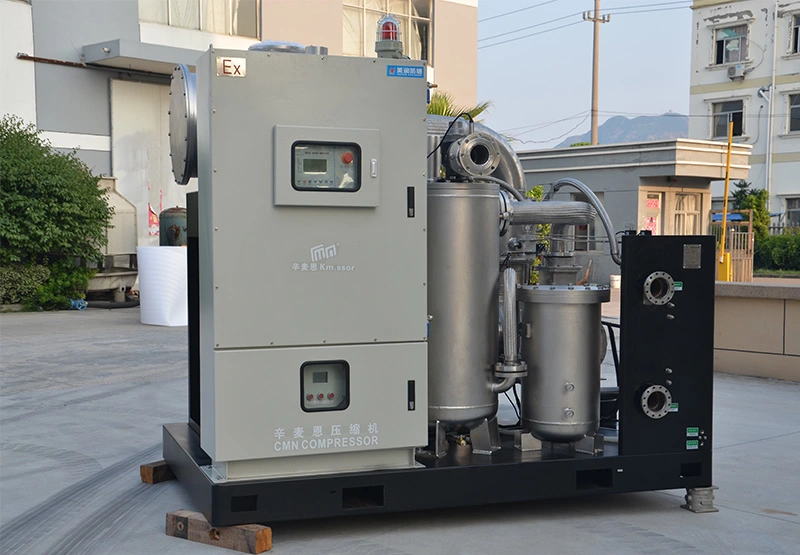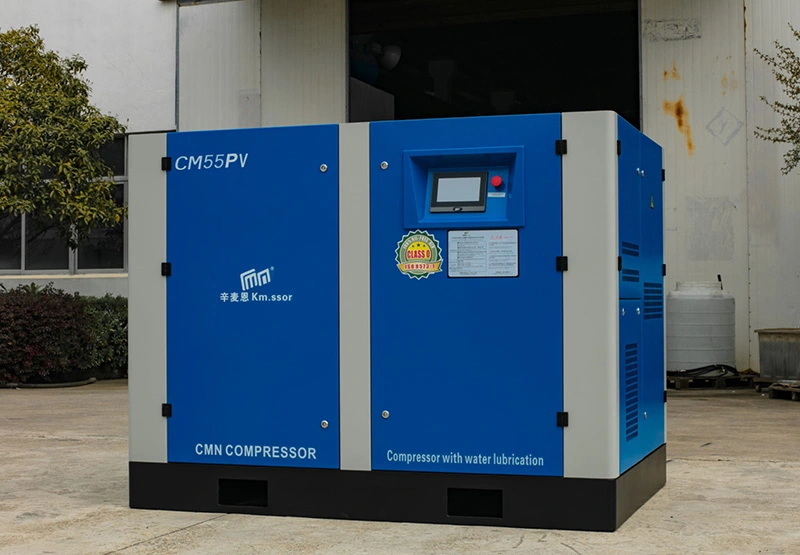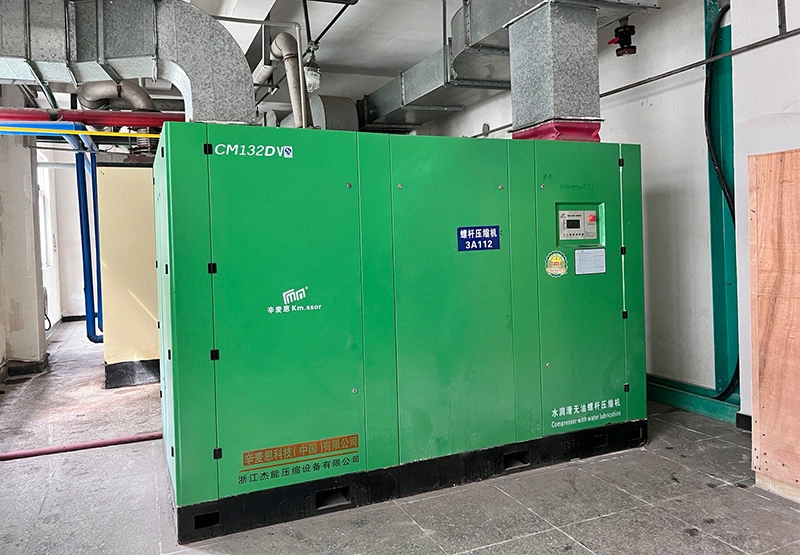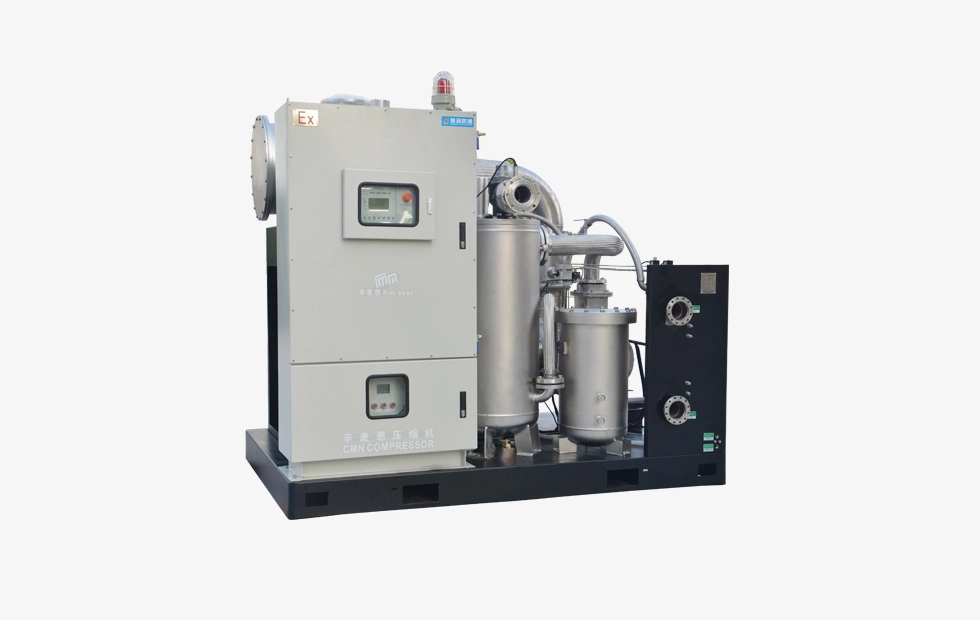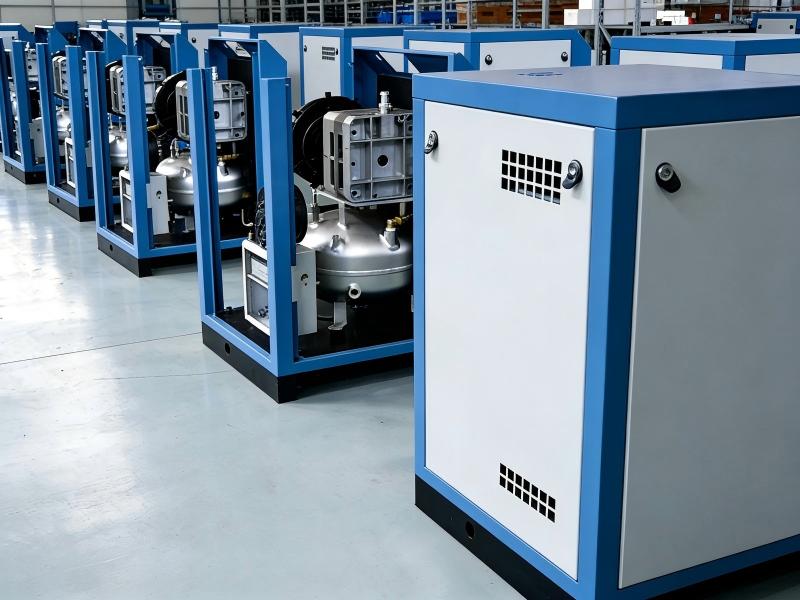

The choice between an oil injected compressor and an oil free unit is really a choice about risk and lifetime cost. CMN builds only oil-free, water-lubricated machines — but understanding the contrast helps buyers justify the decision to stakeholders. This article frames the comparison plainly.
Oil injected compressor: oil floods the chamber to seal and cool, then is separated out.
Oil free (CMN): water lubricates the chamber; no oil enters the air path.
The oil injected compressor depends on filtration to keep oil out of the final air.
Aspect | Oil injected | Oil free (CMN) |
Oil in chamber | Yes | No |
Purity method | Filtration | Design |
Failure mode | Filter fatigue → oil leak | Water quality checks |
For food, beverage, pharma, and electronics, an oil injected compressor carries inherent contamination risk that filtration can only reduce, not remove.
Oil injected compressor needs oil changes, oil filters, and oil separators.
CMN's oil free design replaces that with a simpler water circuit (water filter, separator).
Fewer consumables means fewer scheduled interventions.
An oil injected compressor may have lower upfront cost, but total cost includes:
Recurring oil, filters, and separator spend.
Risk of contaminated product and rejection.
Potential downtime from oil-system faults.
CMN's PMVSD GPV models (CM110GPV to CM320GPV) also cut energy on variable loads, improving lifetime economics.
If the air never contacts product and purity is not regulated, an oil injected compressor can be cost-effective. But for any sensitive process, oil-free is the safer baseline — and CMN's water-lubricated Class 0 units remove the trade-off.
Against an oil injected compressor, CMN's water-lubricated oil-free compressors win on purity, service simplicity, and product safety. For sensitive industries, the lifetime case for oil-free is clear.
CTA: Contact CMN to compare oil free against your current oil injected compressor, or send specs for a quote.
 sales@cmncompressor.com
  +86-15325678508
 English