
Air compressor pressure drop is the invisible tax on every cubic meter you generate. If the compressor must run at 8 bar to deliver 6.5 bar at the tool, that missing 1.5 bar is pure waste — and it scales badly across a plant.
Pipe runs: undersized diameter, long lengths, sharp elbows.
Filters: clogged elements raise differential pressure.
Dryers: blocked heat exchangers add resistance.
Fittings and valves: restrictions and partially closed gates.
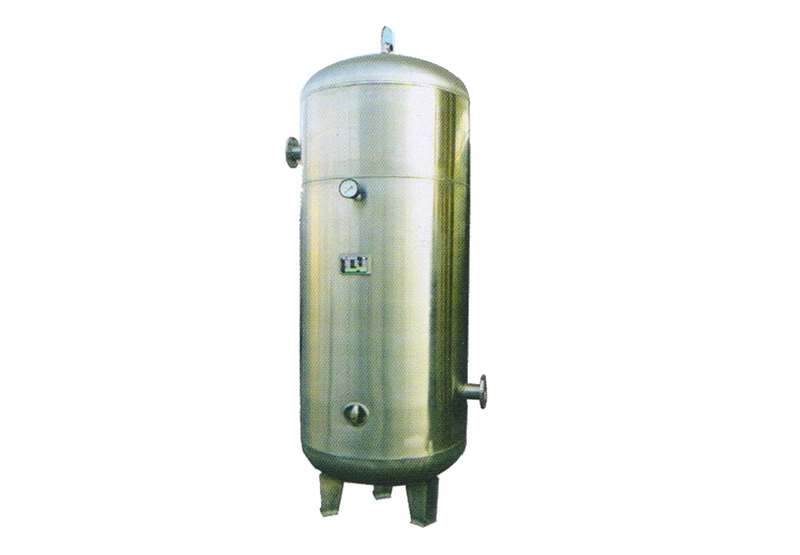
Receivers: too small to buffer demand spikes.
Log pressure at compressor outlet and at the farthest tool.
Subtract to find total drop; map segment by segment.
Track filter differential-pressure gauges over time.
Cause | Fix |
Undersized pipe | Upsize main or add parallel line |
Clogged filter | Replace on schedule, not failure |
Sharp bends | Use long-radius elbows |
Small receiver | Add buffer tank near peaks |
A high drop means you over-specify pressure in your demand calc — fixing the network can let you lower the compressor setpoint and save energy.
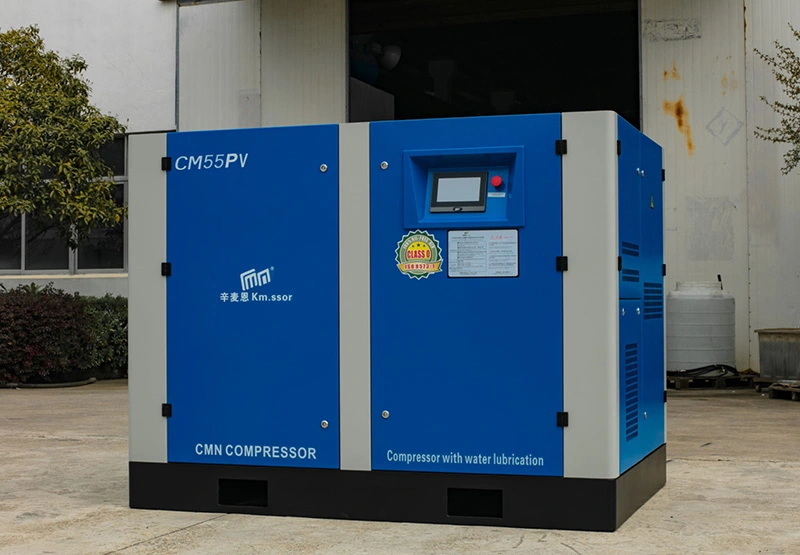
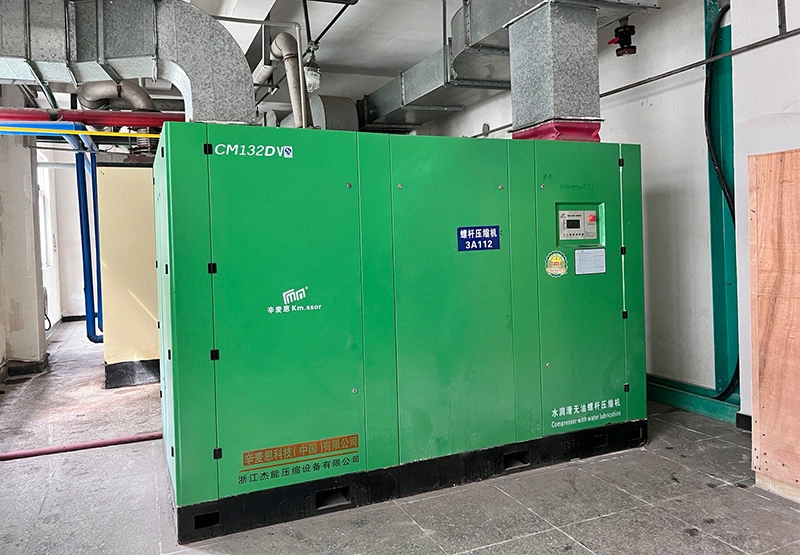
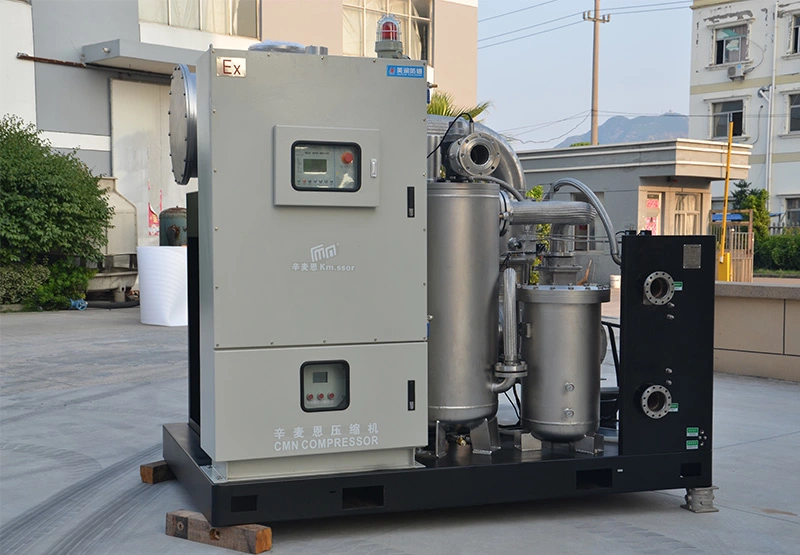
Air compressor pressure drop is cheap to find and expensive to ignore. CMN recommends auditing the network alongside any new water-lubricated oil-free install so you capture the full energy saving.
CTA: Contact CMN for a pressure-drop audit checklist and spec support on your next compressor.
 sales@cmncompressor.com
  +86-15325678508
 English